
Work wear vs Casual wear
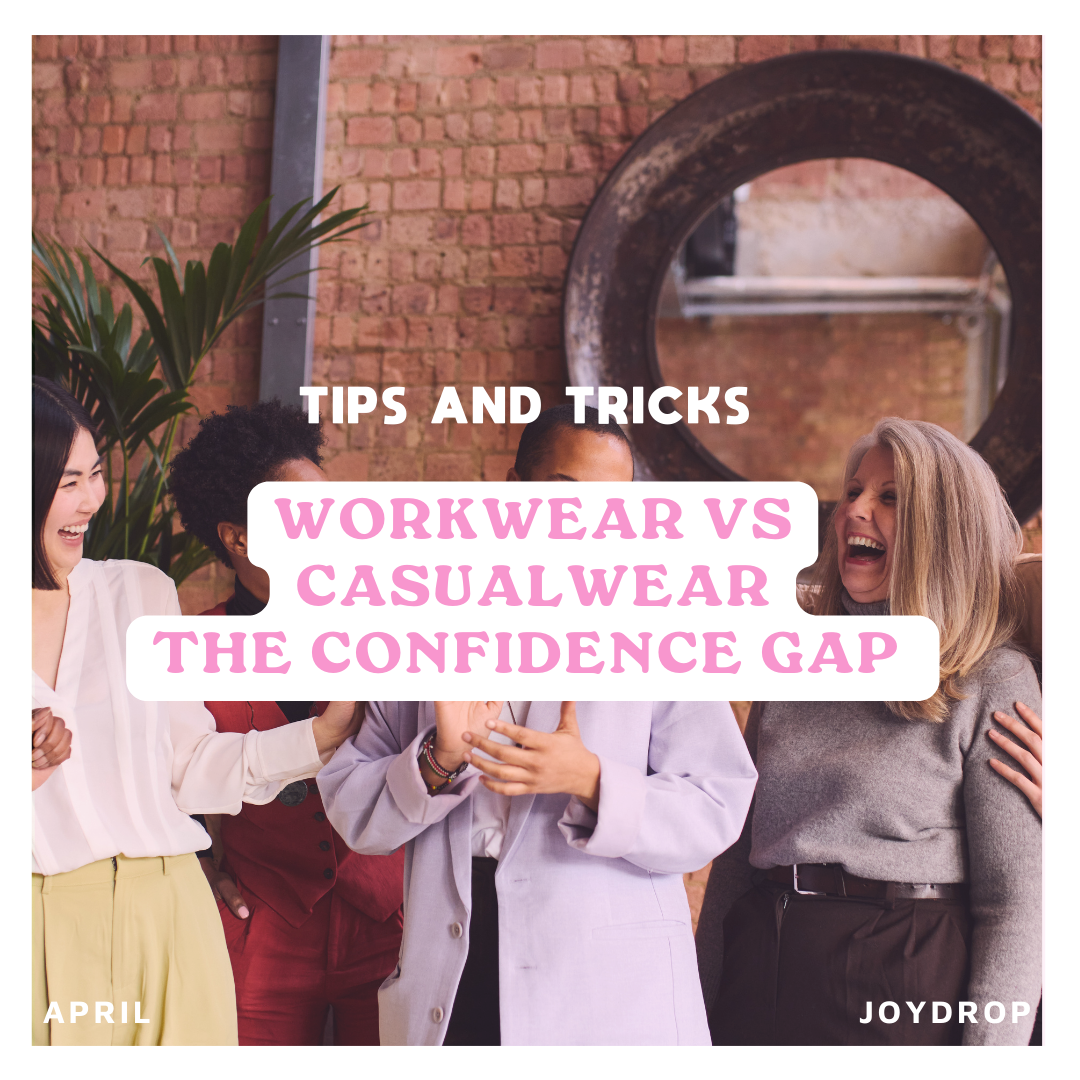
Rachel said something in the group recently that really stuck with me. She said she feels confident with her work wardrobe, but in everyday life she feels a bit at sea.
And I think so many of you will recognise that feeling.
It is actually one of the things I hear most often — that getting dressed for work feels easier than getting dressed for real life. And there are two very simple reasons for that.
At work, you are operating within a framework. You are given, either explicitly or implicitly, a set of rules about what is appropriate to wear, and alongside that, you tend to have a much clearer sense of who you are in that environment.
You might be a lawyer, dressing in a way that feels polished, credible, and authoritative. Or a teacher, choosing outfits that allow you to move comfortably, feel appropriate within a classroom setting, and still express a sense of personality through colour or detail.
In both cases, there is a role you are stepping into, and all of that makes getting dressed significantly easier. You are not starting from scratch each morning trying to work out what feels right. You are simply dressing in alignment with a version of yourself that already feels defined.
I have a friend who is a curator at a gallery, and when we were talking about her personal style we both laughed, because she literally dresses like an art curator — all the time. For some people, that work identity does creep into everyday life quite naturally. But for a lot of us it doesn't translate so easily.
And that is where things start to feel harder. On your days off, it can feel like there are no clear rules to follow, no defined role to step into, and often no strong sense of how you want to show up. So even with a wardrobe full of clothes, it can feel surprisingly difficult to put an outfit together that feels like you.
But here is the thing: you do have rules. You just aren't thinking about them that way.
Your colour season and your body shape give you the container — the same way the dress code of an office does. And just like office rules, they can absolutely be bent to what works for you. Alongside those, you have something just as important: the words that describe how you want to feel — and look — when you get dressed.
Do you remember the words you chose in week three of the course? I genuinely use mine constantly as a lens, especially when I'm buying something new.
Do you remember the words you chose in week three of the course?
I genuinely use mine all the time, especially when I’m deciding what to buy or what to wear.
And I’ll be honest, mine have shifted since I first wrote them down and created the course a few years ago. They’ve become more specific, more visual, and much more useful.
They started as: bold, colourful, joyful, contrast.
And have evolved into: romantic, artistic, contrast, joyful.
Not wildly different, but more accurate.
Less about describing how something looks on paper, and more about how it actually feels when I wear it.
For example, “bold” felt right at the time, but “artistic” gets much closer to what I actually mean, something considered, slightly unexpected, with a bit of creative detail. And “colourful” was already living inside “joyful”, so it didn’t need to stand on its own.
It’s a small shift, but it makes getting dressed, and shopping much clearer.
If you've been in Joyfully Dressed for a while, it might be worth revisiting your own words. The ones you chose when you first joined might not be quite the same ones you'd choose now and that's not a problem. It's actually a sign of progress. Your style shifts as you do, and your words should shift with it.
Because when you take the time to define your everyday identity in the same way you instinctively do for work, getting dressed becomes far more intuitive. You are no longer asking "what should I wear today?" You are asking "what would this version of me wear?"
And that is a much easier question to answer.